Over 10 years across sales, account management, and product leadership in B2B SaaS. I turn the gap between customer need and business capability into product strategy.

AI has shifted where I spend my time as a product leader. The mechanics of PRDs, competitive research, data analysis, story writing, QA, and prototyping are no longer the bottleneck. More energy goes toward the problems that truly shape outcomes and impact customers. Finding time to consistently connect with customers can be difficult when moving at a fast pace, and with all the AI developments now available, I'm able to spend more time understanding customers and their nuanced problems. Ultimately, that leads to better products for the company and for customers.
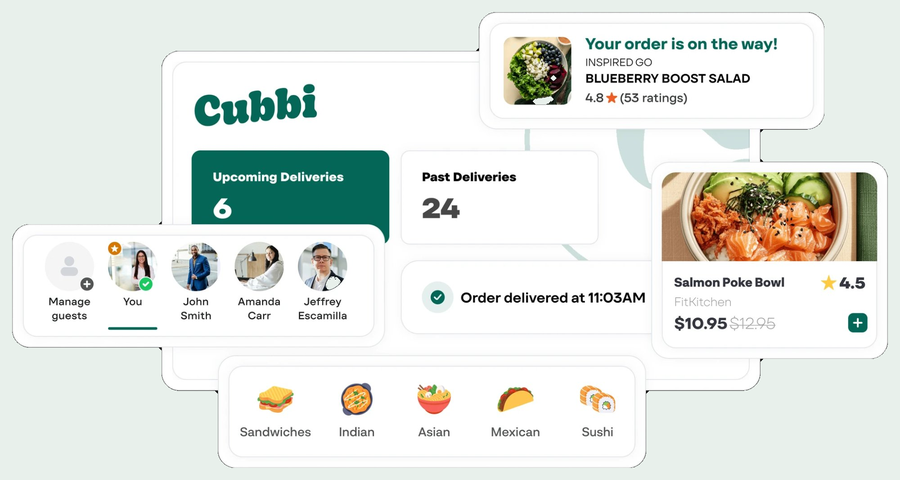
Started with no roadmap, no PM process, and no tooling. Built the product function from scratch, then led the strategy and execution that transformed Cubbi from a simple fridge app into a multi-service workplace food platform across five Canadian cities.
Owned end-to-end product strategy and execution across discovery, prioritization, and delivery, serving as the primary bridge between customer needs, business goals, and engineering capacity.
Owned the full customer lifecycle at an early-stage home care platform. Built the sales and partnerships pipeline, designed the onboarding experience, and provided continuous support while shaping product direction.
Led two product pods, launched Task Management (a new revenue stream tied to the Series B), rolled out Time Off improvements & introduced PTO while optimizing core Scheduling for a large, active user base.
First member of the Account Management team, managing the top 50 restaurant brands with 350+ locations. Built the foundation for enterprise customer management and traveled in-market with the founder to pitch and educate executives.
Started as a Business Development Representative selling Vendasta's white-labelled digital marketing platform, then promoted to a team that managed Vendasta's top 5% of partners. I was responsible for a $3.5M ARR book of Business.
Roadmapping, prioritization, and lifecycle management from zero to scale.
Planning and executing launches that drive adoption and revenue.
Behavioral analytics, A/B testing, and post-launch metrics to iterate fast.
Building and inspiring cross-functional teams of engineers, designers, and marketers.
Deep sales and account management roots that inform how products get built.
Implementing tools like Jira, Amplitude, HubSpot, Stripe, and Metabase at scale.
Confident presenting to executives, customers, and large training audiences across North America.
Validating demand through customer research, prototypes, and tight feedback loops before scaling.
Breaking down ambiguous business challenges into root causes and actionable next steps.

Full-stack CRM integration across sales, marketing, and support.

User behaviour tracking and release tracking.

Data warehouse for data analysis and financial analysis.

Product team task management and backlog management.

Call tracking and recording.

Design tool for UI/UX collaboration.
Payment processing system.

Centralized database for customer feedback across all channels.

Prototype generation, competitive analysis, PRD assistance, and project management.

Docs, Sheets, Slides, Drive, and Gmail for team collaboration and documentation.
Sourced from LinkedIn recommendations & reference letters

I'm a product leader based in Calgary, Alberta, where I live with my wife. Outside of Product and Technology, I'm happiest on a mountain trail, around a campfire, or carving down a mountain. I love getting lost in a good board game, experimenting in the kitchen, and exploring new places whenever we get the chance.
I've spent my product career turning messy customer problems into products that drive growth. Here's a look at some of the works that's shaped me.
How I joined a university fridge locker startup and transformed it into a B2B workplace food platform, scaling from 6 paying customers in one city to 743 businesses across five.
Cubbi started life as "Lunch Locker" in 2020, a simple concept where university students could rent fridge lockers on campus. The team partnered with a few local restaurants to let users order food to these fridges, and over time began placing them in public areas: gyms, tower lobbies, and a handful of businesses.
It was a consumer product with a straightforward value proposition: order lunch, pick it up cold from a fridge near you. But the business model was fragile. Businesses didn't want to pay for something that mainly served their employees while giving nothing back to the organization. When I joined in September 2022, there were about 6 paying customers with the rest operating for free.
Coming from a B2B background at 7shifts and Vendasta, I saw a clear opportunity. Every business I spoke with during my first weeks had some version of the same food problems: expensive catering, no way to manage food benefits, and scattered vendors for every food need. The fridge and restaurant network Cubbi had built was a foundation, not a finished product.
My vision was to turn Cubbi into an all-in-one workplace food platform that businesses would pay for because it solved their problems, not just an employee perk they tolerated. A platform covering lunch delivery, catering, grocery, and employee food benefits, all under one roof with unified billing and management tools.
Redesigned and rebuilt the mobile app from scratch with a completely new brand identity. Fixed fundamental logistics problems with order processing, inventory management, and delivery operations.
Built the technical and operational infrastructure needed to support multiple cities, multiple service lines, and a growing restaurant network. Implemented the full tool stack: Jira, Amplitude, HubSpot, Stripe, Metabase, Zendesk, and more.
Launched the catering product as the first major B2B feature, giving businesses an immediate reason to engage with the platform. Built the business dashboard around it, creating the management layer that would house all future B2B tools.
Expanded the dashboard with employee management, billing management, credit visibility, reporting, profile management, and web-based lunch ordering. Each feature deepened the business relationship and increased switching costs.
Launched a grocery ordering service, allowing businesses to order office staples like coffee, drinks, bagels, and snacks through the same platform. Another service line, another reason to stay.
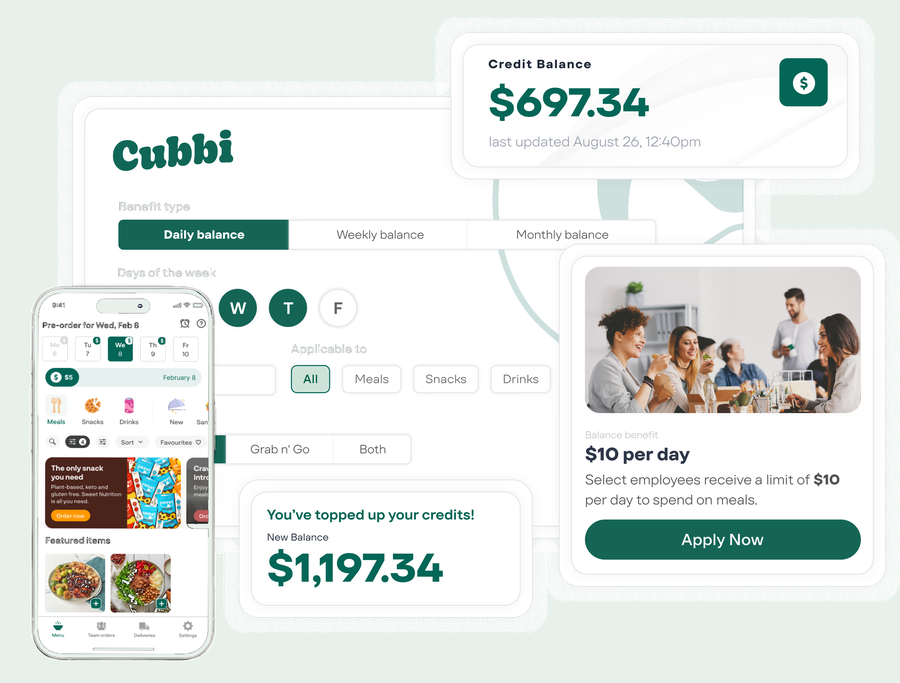
Built the self-serve credit and benefit management system. This became the product that would grow into 43% of Cubbi's MRR and transform the company from a food delivery service into a workplace benefit platform.
Built a dedicated driver app for improved delivery efficiency and a restaurant dashboard giving partners visibility on orders, item management, vendor profiles, meal ratings, and billing.
Cubbi's customer model layers cleanly from the top down. An Organization pays a subscription, manages credits and benefits, and rolls up one or more Business Locations. Each location has employees grouped by role, who order across three product lines: Lunch, Catering, and Grocery. Employees can pay for any order out of pocket, or apply credits the organization has purchased to discount their meal — turning a single platform into both a workplace amenity and a measurable employee benefit.
This structure created three compounding revenue streams: recurring subscription fees from the organization, credit purchases tied to employee usage, and direct food sales from employees paying for their own meals — all of which scaled in lockstep as the platform matured.
Pays subscription · manages credits & benefits
Delivery address · active membership term
Full access
Permissioned
Orders meals
Preorder & Grab n' Go
Guest, host, custom
Weekly delivery
Org buys credits · creates benefits · employees apply at checkout
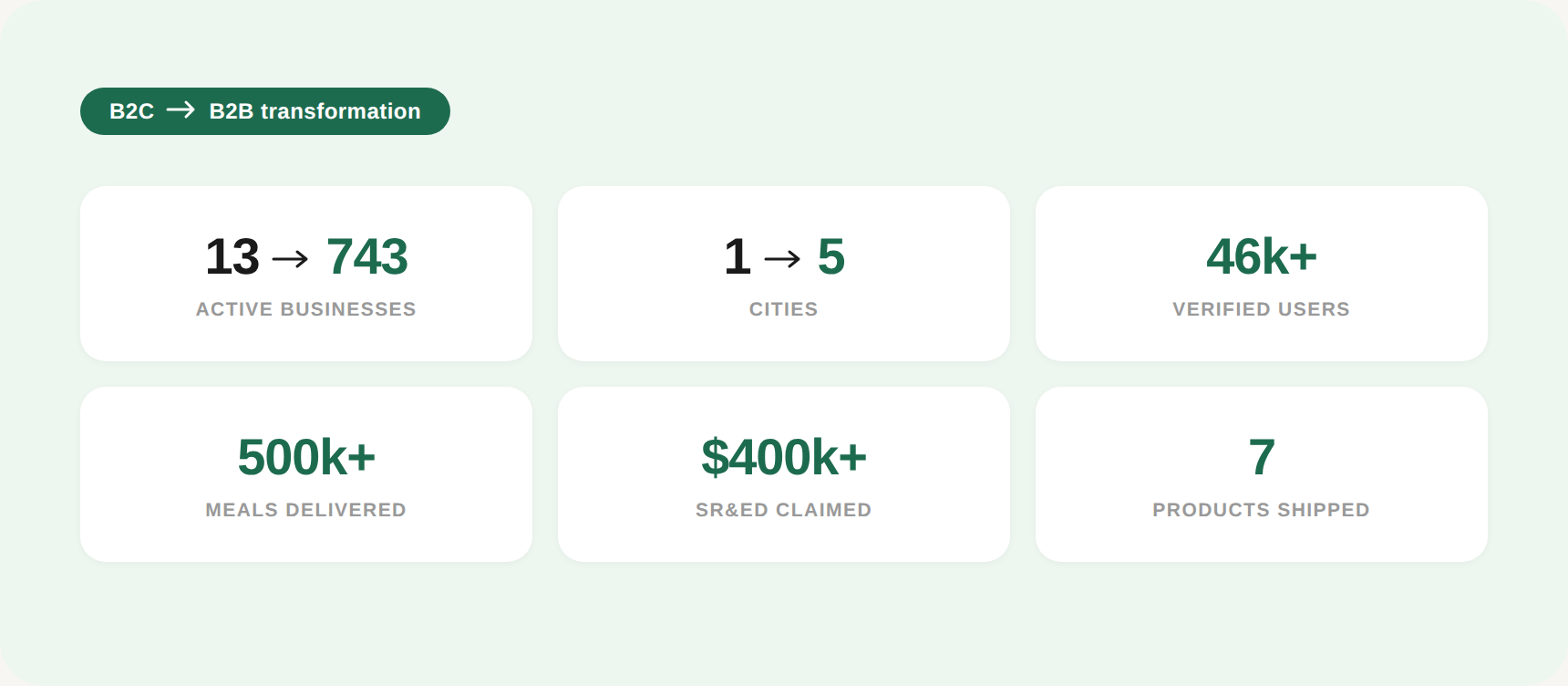
Since September 2022, Cubbi scaled from 13 businesses to 743 across two revenue streams: subscription fees paid by businesses, and food benefit credits purchased for their employees. All revenue figures below are indexed to protect confidentiality.
It's worth noting that food sales revenue, generated from Lunch, Catering, and Grocery orders, is an additional stream of revenue not included in the figures below. The charts focus exclusively on subscription and credit MRR as the two primary B2B revenue drivers.
Indexed MRR for subscription and credit streams, Sep 2022 to Mar 2026
Total active businesses on the platform, including building tenants
Revenue indexed to 100 at Sep 2022 (subscriptions) and Mar 2023 (credits). Actual figures withheld.
Led IRAP (Industrial Research Assistance Program) project management, reporting, and execution. Managed SR&ED project reporting and consulting, successfully claiming over $400,000 in total reimbursements for the company.
Spearheaded the integration of the company's entire operational tool stack to support growth and scale, not just for the product team, but across the whole organization.
Full-stack CRM integration across sales, marketing, and support, enabling pipeline visibility, automated nurture campaigns, and a self-serve help centre.
User behaviour tracking and release tracking for data-driven product decisions.
Data warehouse for data analysis and financial analysis across the business.
Product team task management and backlog management.
Call tracking and recording for customer interviews and team meetings.
Design tool for UI/UX collaboration across the product team.
Payment processing system for all subscription and credit transactions.
Centralized database for all incoming customer feedback from various channels.
Prototype generation, competitive analysis, PRD assistance, and project management.
What started as a university fridge locker concept became a full workplace food platform operating across five cities. The B2C to B2B pivot didn't just change who was paying. It changed what Cubbi was. Businesses now had a single platform for employee lunch, catering, grocery, and food benefits, with self-serve management tools and clear ROI metrics.
Every product I built compounded on the last. Catering opened the door to business relationships. The business dashboard deepened those relationships. Credits and benefits made Cubbi indispensable. The grocery product added another service line. And the operational infrastructure (the driver app, restaurant dashboard, and nine company-wide tool integrations) kept the entire machine running efficiently as we scaled.
Beyond the products themselves, I drove over $400,000 in government reimbursements through SR&ED and managed IRAP project execution, directly contributing to the company's financial runway. The tool stack I implemented transformed how every department operated, from sales pipeline visibility in HubSpot, to data-driven product decisions with Amplitude and Metabase, to AI-accelerated workflows with Claude.
Building a single platform for all business food needs, and transforming Cubbi's sales conversion from 16% to 55% in six months.
When I joined Cubbi, the product was a simple consumer mobile app. Employees could order lunch from a small group of restaurants and pick it up from a fridge. There was no meaningful value proposition for the businesses paying the subscription. Selling was hard, conversion rates were low, and there was little inbound interest.
My first strategic goal was to transform Cubbi into a platform that solved real business problems, not just employee convenience. Catering was the perfect entry point.
Through dozens of customer interviews, I uncovered a consistent set of catering pain points that every office manager dealt with:
Accommodating unique dietary preferences and allergies among staff was a constant headache. Collecting everyone's orders was incredibly time-consuming. Finding a single restaurant that worked for everyone felt impossible. Consistent catering meant juggling multiple vendors, different payment methods, and no way to manage a catering budget. Managers spent time chasing employees for their selections, and still ended up ordering too much or too little.
We weren't offering enough value to the business to justify a subscription. Without solving real business problems, our sales conversion sat at just 16%. Our value proposition was primarily aimed at employees, but businesses were the ones paying.
We needed stronger relationships with business leaders to prevent churn, a new revenue stream, and a product that gave us a credible reason to be in the room with decision-makers.
Catering was a universally recognized business need. Every company does it. We could leverage our existing delivery infrastructure and restaurant network to build a comprehensive solution without starting from scratch. It would open a new revenue stream, drive additional orders for our restaurant partners, and give us a powerful product-led growth lever: get businesses hooked on catering, then transition them into the full employee lunch service.
Interviewed dozens of customers to deeply understand their catering challenges, workflows, and pain points.
Identified solutions we could build on our existing foundation, and mapped the impact across the driver app, restaurant dashboard, inventory management, and reporting.
Built prototypes, reviewed them with customers, collected feedback, and iterated toward a final MVP scope alongside medium and long-term plans.
Built supporting infrastructure across the driver app, internal tooling, reporting, and restaurant dashboard, then shipped the MVP and introduced it to customers.
Collected feedback post-launch and continuously iterated on the product based on usage data and customer input.
A streamlined flow in the Cubbi business dashboard where a manager can create a catering order in minutes: set a delivery date, invite guests, and let the platform handle the rest. Each guest receives an email notification with a unique link to browse the menu and pick a meal that fits their dietary needs. Cubbi sends automatic reminders, manages per-employee budgets, and labels each meal for easy distribution. The dashboard provides full transparency on who has confirmed and who hasn't.
A frictionless experience where employees get invited to a catering order and can make their selection whether they have a Cubbi account or not. Built-in dietary filters ensure everyone can find a meal that works for them, with no more back-and-forth with the manager.
The catering product became a powerful PLG lever. It gave us an easy, recognizable problem to solve that got our foot in the door with B2B customers. Once businesses experienced the value of catering through Cubbi, transitioning them to the full employee lunch service became a natural next step.
Designing an employee food benefit system that became Cubbi's most impactful product, now making up 43% of MRR with a 12.6x delivery multiplier.
As Cubbi's business platform matured and catering adoption grew, a clear pattern emerged from customer conversations: business leaders didn't just want to offer food services. They wanted to actively subsidize and manage food as an employee benefit. Some wanted to cover lunch entirely, others wanted partial discounts, and many wanted recognition tools tied to food credits.
The challenge was that every business had a unique way of thinking about food benefits. Some wanted $15 per employee per day. Others wanted $5 off per meal, three times a week. Some wanted credits only for preorder lunch, others for catering and grocery too. The system needed to be flexible enough to handle all of these use cases while remaining simple for administrators to manage.
Business leaders lacked a self-serve tool to create, manage, and measure employee food benefits. Every change required contacting their Cubbi account manager, whether that was setting up a discount, adjusting a benefit, or gifting credits for a birthday or performance recognition. There was no visibility into engagement data, no way to track ROI, and no ability to categorize spending by purpose.
With 90% of business leaders planning return-to-office policies, and nearly 50% of employees considering a food benefit their favourite workplace perk, the demand was clear but the tooling didn't exist.
Credits were already proving to be a massive growth lever. Businesses with credits had a 12.6x higher delivery rate than those without. But the process was entirely manual. Every credit purchase, benefit configuration, and gift card had to be handled by the Cubbi team. This created bottlenecks, limited scalability, and meant we were leaving significant revenue on the table.
We needed a self-serve system that would unlock this revenue potential while reducing operational overhead.
Credits and benefits represented a massive opportunity across three pillars. First, as a general food benefit that helps businesses improve their workplace experience, attract talent, and support return-to-office initiatives. Second, as a recognition tool that enables managers to reward high performers, celebrate birthdays and work anniversaries, and improve onboarding experiences. Third, as a management platform that gives leaders full transparency and control over their food benefit spending with clear ROI metrics.
Customers like EQ Bank were already spending $108,000 per year in employee credits on top of their $12,000 annual subscription, with commitments to expand to additional locations. The demand was validated. We just needed to build the product to scale it.
Credits became a form of currency at the organization level. Administrators could purchase credits through recurring terms (monthly, quarterly, semi-annual, or annual top-ups) or one-time purchases, paid via invoice or credit card. The credit balance served as the foundation for all benefit spending across the organization.
Benefits are discount cards that appear in each employee's Cubbi Wallet. They can be configured as coupon-based (fixed discount per item, e.g., $10 off a meal) or balance-based (a budget to spend across multiple items). Benefits can be scoped to specific service lines (lunch, catering, or grocery) and further refined to preorder or Grab n' Go only. Administrators can set start and end dates, restrict availability to specific delivery days, and assign benefits to individual employees or groups.
A daily or weekly lunch subsidy for all employees, e.g., $15 per day or $5 off per meal, up to 3 meals a week.
New employees automatically receive credits during their first week, covering lunch and creating a positive first impression.
Managers receive a budget to recognize high performers with food credits. Working late? Employees unlock a credit for Grab n' Go meals after 6pm.
Automated credits for birthdays and work anniversaries. Employees get $10 to spend on food on their special day.
When a business first rolls out Cubbi, employees receive introductory credits to try the platform, driving initial adoption.
A core part of the credits and benefits system was giving leaders the tools to measure impact. The business dashboard enabled administrators to evaluate program engagement, identify how many employees had been impacted, see exactly how much had been invested across onboarding, performance recognition, personal milestones, and general food benefits. Full transparency on all credit spending with exportable data.
This was a key differentiator. Traditional workplace benefits like health and wellness programs make ROI extremely difficult to calculate. With Cubbi, leaders could see exactly how their investment translated into employee engagement, adoption, and satisfaction.
The credits and benefits system transformed Cubbi from a food delivery platform into a workplace benefit platform. It gave business leaders the tools they needed to invest in their employees, measure the impact, and justify continued spending, creating a powerful retention and expansion engine for Cubbi's business model.
A self-serve platform concept that gives commercial real estate landlords full control over tenant onboarding, food benefits, and billing, built end-to-end as an AI-driven exploration.
Commercial real estate (CRE) landlords are an increasingly important customer segment for Cubbi. As return-to-office initiatives accelerated, building owners began looking at workplace food as a tenant amenity: a way to differentiate their towers, drive foot traffic, and improve tenant retention. But the existing Cubbi tooling was built for individual businesses, not for landlords managing entire buildings full of tenants. CRE customers were powerful, but the experience around them was almost entirely manual.
Landlords were operating without the tools they needed to manage food as a building-wide amenity. Onboarding was fragmented and required heavy hand-holding from the Cubbi team. There was no transparency into deliveries happening in their buildings or how many tenants had actually activated. They had no way to gift credits to tenants, no way to set up food benefits for the people working in their tower, and no visibility into billing or recent billing updates. They also had no self-serve way to purchase credits or check their current balance.
On the operations side, the lack of self-serve tooling created significant manual overhead. Onboarding a single CRE customer was a long, high-touch process. Every month, the team had to manually generate reports covering credits, utilization, and tenant onboarding. Gifting and food benefit creation were also handled manually for every request, which didn't scale as the CRE segment grew.
A dedicated CRE Dashboard could solve every one of these customer problems while simultaneously eliminating the manual operational burden on the Cubbi team. By giving landlords a single self-serve platform to manage onboarding, tenant activations, credits, benefits, and billing (with full transparency throughout), Cubbi could unlock the CRE segment as a scalable channel rather than a high-touch one.
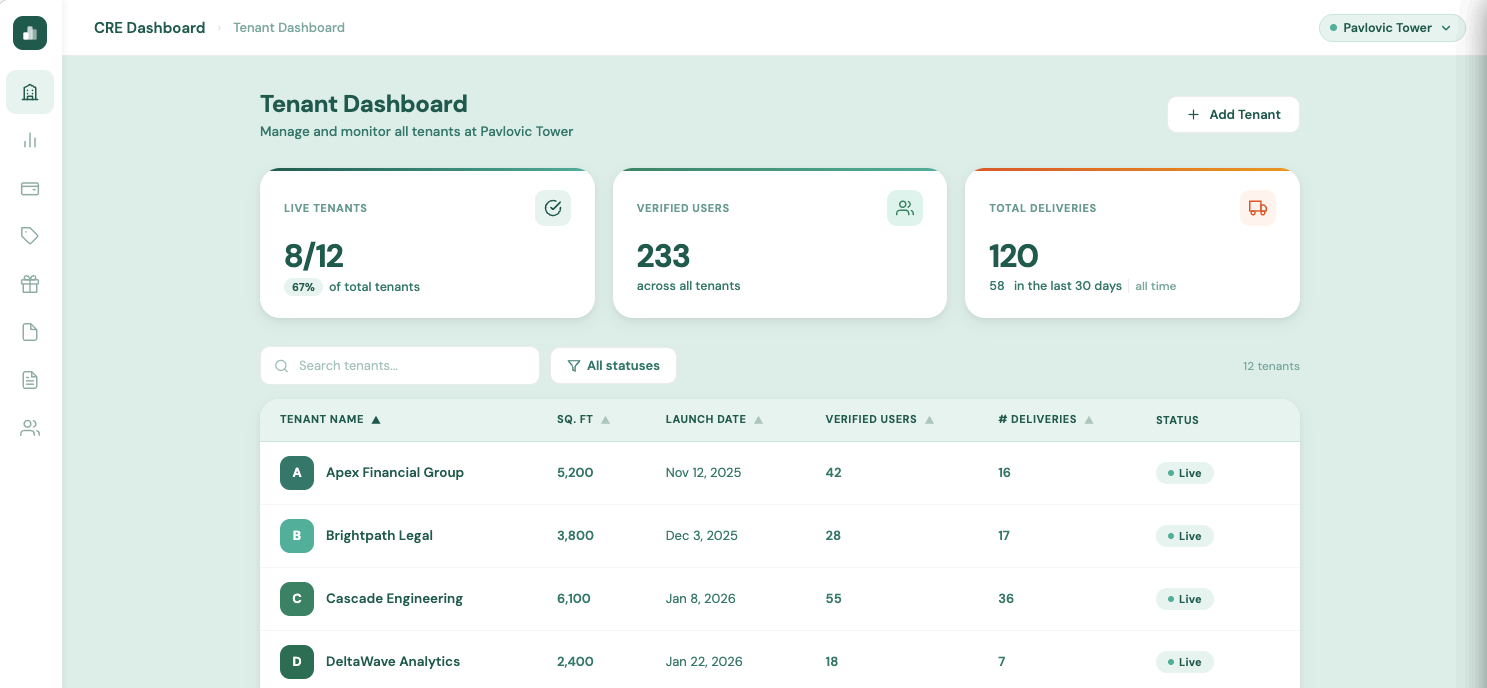
The CRE Dashboard was designed as a single platform purpose-built for landlords. It consolidates every workflow that previously required Cubbi intervention into a self-serve experience: streamlined tenant onboarding, real-time visibility into deliveries and activations across the building, credit purchasing with live balance tracking, the ability to gift credits to individual tenants, tools to create building-wide food benefits, and complete transparency into billing and billing history. In short, every CRE customer pain point is addressed in one place.
Started by building a basic HTML walkthrough directly in Claude, quickly translating the problem space into a clickable prototype to validate the core flows and information architecture before writing any production code.
Took the validated prototype into VS Code and built it out properly using React Native, structured under the Bulletproof React framework for a scalable, well-organized codebase.
This is an exploratory AI project that has not been shipped. It was built as a way to pressure-test how quickly a real product concept could move from problem definition to a working, well-architected prototype using AI tooling, and to demonstrate what a fully self-serve CRE experience could look like for Cubbi.
Onboarding was the first problem to solve. Previously, getting a CRE customer set up on Cubbi was a manual, multi-week process that involved back-and-forth emails, hand-collected documents, and a Cubbi team member shepherding every step. The onboarding prototype reimagines this as a guided self-serve flow that a landlord can complete in a single sitting: company details, billing setup, plan selection, tenant import, and asset distribution, all in one continuous experience with clear progress indicators at every step.
Once a CRE customer is onboarded, the dashboard becomes their day-to-day hub. The prototype below is fully interactive. Click around to explore the tenant dashboard, benefits creation flow, credit purchasing, gifting, billing management, and reporting.
Whether you're looking for a product leader, want to collaborate on something, or just want to say hello, I'd love to hear from you.